WE'RE ALL IN THE SAME BOAT - AREN'T WE?
Tuesday 31 January 2012
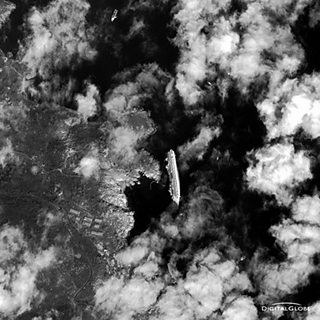
At every moment there are hundreds of thousands of Americans and Europeans floating around the world on "Funships" - superliners like the Costa Concordia that crashed and capsized off the coast of Italy.
These ships are extraordinary creations, millions of ordinary people pay not very much to spend weeks in an offworld pleasure bubble, surrounded by vast replicas of pictures and architecture from the glories of past civilizations.
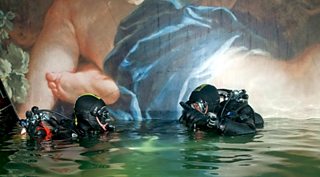
Italian Navy
I want to tell the story of the rise of the modern cruise ship industry from its beginning in the 1960s - how it promised to make a world of aristocratic luxury available to everyone in the west, but also the hidden story of how that promise was achieved.
In many cruise ships there are hundreds of workers from some of the poorest countries on earth who are paid minute amounts of actual wages - sometimes less than two dollars a day - to attend to the passengers' needs.
Many of the ships' workers can only get a living wage on the whim of the thousands of passengers above them - on the tips they choose to give them. And in the strange fun-world of the superliners the waiters, the cabin staff, the cooks and everyone else who serves, live in a state of continual vulnerability - unprotected by most of the employment laws that apply on land. Meanwhile many of the companies that own the vast ships pay practically no tax at all.
But it wasn't always supposed to be like that.
The biggest company in the cruising world is the Carnival Corporation, based in Miami (the Costa Concordia is owned by one of their subsidiaries). Carnival has its roots in a small company set up in the 1960s which had a utopian vision that cruise liners could transform the world. One of its founders believed that the giant ships were machines that could help bring about a new era of world peace.
The liners would, he was convinced, unite the rich westerners and the poor from the "third world' by bringing tourists to new and remote destinations. This would foster a new enlightened understanding of each other that would bring about equality and justice throughout the world.
But it didn't turn out like that. And this is the story of what happened - and how the very opposite resulted.
It is also the story in miniature of one of the central consumer phenomenons of our time: the democratisation of luxury. How one half of the world all began to live as though they were aristocrats, while the other half became their servants. And how this allowed the real elite aristocrats of our time - who had become wealthier than any group ever before in history - to disappear, and become invisible.
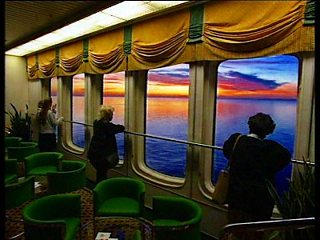
The idea of elegance and aristocratic indulgence of an ocean cruise was born out of the image of the rich men and women who ruled the British Empire slowly sailing to India and the Far East while sipping gin and tonic on deck - served by men in white jackets.
But with the growing democratisation of Britain after the second world war, more and more ordinary people wanted to experience this, and what was called "the Cruising Revolution" started. In the 1960s the "one class cruise" was invented - passengers were promised that the experience would still be "ultra deluxe", but anyone could go, there were no class divisions.
In reality the idea was born out of desperation. Jet airliners had stolen many of the transatlantic passengers, which meant the shipping companies had nothing to do with their liners.
In 1966 Alan Whicker made a wonderful documentary about one of these cruises. It was on a liner called The Andes, and it is a very funny picture of Britain's postwar class structure in miniature when they are all thrown together in a boat. Everyone claims to be getting along together - but they all bitch about each other and everyone hates the Nouveaux Riche.
Here they all are, enjoying their genre fiction.

And there's always one:

I love the fact that there is a mysterious child on the ship that everybody complains is going round telling the passengers to "shut your cakehole", but Whicker can never find him.
There is also a woman who in one sharp line points to the problem that would bedevil the democratisation of luxury. "I came because I expected millionaires" she says - "but all I found was a load of Huggets". The Huggets were a fictional working class family from a famous radio sitcom.
If exclusive places are open to everyone then they are no longer exclusive.
Here is some of the film.

But it was the Americans who took the cruising revolution and turned it into a global phenomenon.
In the mid sixties the American cruise industry suffered a terrible disaster. An old converted troop ship called the Yarmouth Castle was on a cruise to the Bahamas when it caught fire and 91 people died. It was a terrible scandal, the sprinklers didn't work and the public address system failed. And the captain, it was alleged, jumped into one of the first of the lifeboats with four other passengers and sped off into the night. He later claimed that he was going to get help.
Here is a postcard of the Yarmouth Castle along with a picture of it on fire.
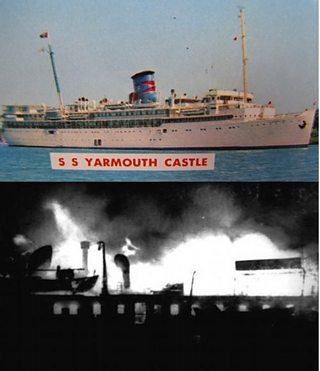
An Israeli-American businessman called Ted Arison saw an opportunity to regenerate the cruising industry - by using modern boats.
In the mid 1960s Arison was working in the airfreight business in New York, but his family had run shipping lines in Palestine and Europe in the 1930s, and he wanted to start a cruise line.
Arison found a Norwegian called Knut Kloster who had a suitable boat. Kloster also came from an old shipping family. They had made their fortune shipping ice to Europe from Norway, and they now ran a vast fleet of tankers. In 1966 Kloster and Arison set up a company called Norwegian Cruise Lines based in Miami.
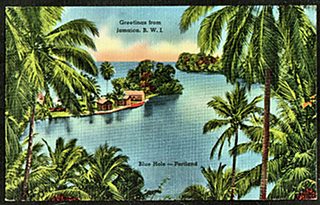
Kloster and Arison are today seen as the founders of the modern cruise industry. Their first boat, the Sunward, started taking middle-class Americans on week-long cruises to Jamaica from Miami - and it was an immediate success. They also became close friends.
Kloster believed that the aim of capitalism was not just to make money but to use its power to improve society. He saw the world as divided between the rich, industrial west - and the "third world" which was struggling to escape from the debilitating legacy of colonialism, and the still vastly unequal distribution of global power.
So his cruise ships were going to remedy that.
Kloster hated the idea that his liners were just going to take white middle class Americans on cheap holidays in other peoples' hell and misery. He supported the left-wing politicians in Jamaica who said "Tourism is Whorism".
Here is a picture of Kloster, his wife, and a very big boat
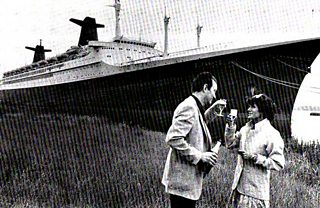
Kloster held brainstorming sessions in the company to come up with new ideas that would provoke the American tourists to engage with the lives of those they were pointing their cameras at. One brilliant suggestion was that women workers in a Jamaican coffee factory should be given instamatic cameras so they could take picture of the passengers as they toured past them. The aim was to make the tourists feel what it was like to be watched and snapped as if they were animals in a zoo.
In a wonderful and perceptive history of the cruise industry called Devils on the Deep Blue Sea, Kristoffer Garin has described another scheme that Kloster dreamt up. It was called "New Experiences", and involved having a "Jamaican Family in Residence" on each cruise.
The New York Times described what was supposed to happen:
"The passengers will be invited to meet the Jamaicans informally, to dine together, drink, dance and play together, to ask questions and pump them for all kinds of information in friendly conversations with no holds barred, including political and racial problems."
And then - when the ship arrived in Jamaica - there was going to be the "meet the people experiment" where passengers would go and spend a day with middle-class Jamaican families who were like the passengers - doctors would meet doctors, teachers would meet teachers - people Kloster believed would be "articulate enough to communicate".
The only problem was that they couldn't find enough Jamaican middle class families, and many of those who were deemed suitable thought it was incredibly patronising. Plus Kloster found that behind his back in the Miami offices the experiment was called the "Take a Nigger to Lunch Program"
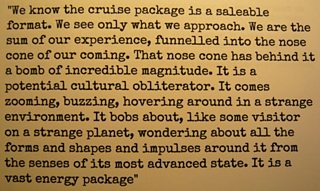
Kloster was helped in his vision by his vice-president of public relations, called Herb Hiller who was a bit of an early countercultural management theorist. In 1970 Hiller wrote the greatest company mission statement of all time:
But then it all went wrong, because Kloster discovered that his friend, and business partner Ted Arison wasn't a nice capitalist, but a ruthless one.
Kloster claimed that Arison had been taking the advance payments he was supposed to be holding from the bookings and doing all sorts of odd and dodgy things with the money. Plus a lot of it was missing. Kloster accused Arison of cheating him, Arison denied it and there was an enormous row - and Arison left the company taking with him all the future bookings. So Kloster broke into Arison's new offices late at night and stole them back.
Arison set up a new company to try to beat Kloster - it was called Carnival Cruises, and it was funded by a great character called Meshulam Riklis.
Riklis was one of the earliest of the takeover kings of the 1970s and 80s who used junk bonds to build a giant financial empire. He is also famous for lavishly wining and dining the judges of the Golden Globes awards in 1981 - which some believe led to the unlikely triumph of his actress wife, Pia Zadora, for her film Butterfly.
Here is a picture of Ted Arison.
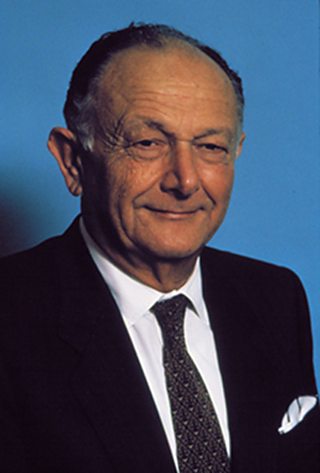
To make Carnival Cruises grow, Arison went downmarket - offering the cruise experience to people who would never have considered it before. Then he had a massive stroke of good luck in 1977 when ABC TV began the Love Boat series. The series was an instantaneous hit and it transformed the image of the cruise liner. It not only portrayed it as a sexual paradise, but crucially a paradise that was open to all. It was the opposite of the exclusive and unattainable world portrayed in Dallas and Dynasty.

But to make the cruise affordable Carnival had to cut costs - and Arison did this through tough management. Just how tough was shown on Easter Sunday 1981 when 300 crewmen on two of Carnival's "fun ships" in Miami decided to strike. They weren't unionised, it was a spontaneous outburst against the harsh world they were forced to live and work in, and the low wages.
Ted Arison's son Micky was now second in command. Garin's history describes what Micky then did. He waited four days, and then invited the strikers' leaders to come ashore to talk. But it was a trick.
At the same time Micky sent a fake news helicopter to fly down the side of the boats. The strikers rushed to the deck to wave banners at the helicopter - while at the same time a force of private security men wearing helmets and holding clubs rushed onto the ship. They cornered the terrified strikers, pulled them off the liner and gave them to the immigration authorities waiting on the deck - who promptly deported them back to Honduras.
It couldn't have been more different from Knut Kloster's utopian capitalism.
But Knut was about to have another vision that was going to make everyone in the cruise industry rich beyond their dreams.
Kloster was still running Norwegian Cruise Lines and, in 1986, he came up with "The Phoenix Project" which was going to build a giant ship like nothing else ever seen in the world.
The journalist Kristoffer Garin described Kloster's vision:
"Phoenix would carry a staggering 5200 passengers and an additional 1800 crew - a number that rivalled the entire fleet capacity of any of NCL's competitors. Brochures spoke breathlessly of a ship designed for the 21st Century - a 'floating metropolis" a ship with a skyline.
Phoenix's superstructure would consist of several towers each of them eight or nine stories high, built atop a giant hull spanning the length of four football fields. It would feature beaches, palm trees and a retractable harbor at which smaller ships could dock. Its amenities would include nearly a hundred thousand square feet of convention space"
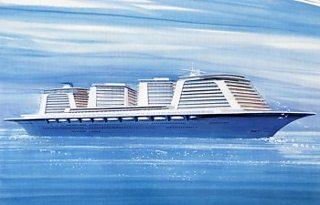
And true to his beliefs, Kloster still saw it as a way of helping create a better world - the brochure described:
"On this particular day, CEOs of Fortune 500 companies land their helicopters on the middle tower to join a conference on capitalism and third world development."
But the board of NCL thought he was mad - and in 1987 Kloster left the company. In his final speech he compared himself to John deLorean and finished by saying "business in America is impersonal" - and disappeared off the scene. Or so it seemed.
Meanwhile in the following years all the other cruise corporations in Miami, led by Carnival, did exactly what Kloster had dreamed of. They built giant superships that were just like the "floating metropolises" he had wanted to build.
The modern world of the cruise mega-liner is remarkably like Project Phoenix - except for one difference - no one comes on a cruise to discuss the problems of the developing world and how to create world unity.
That bit of Kloster's vision didn't make it into the modern cruising world.
Instead the ships became floating palaces where everyone became like an aristocrat on a sea voyage.
In the 1990s the BBC made a docu-soap on one of the new giant ships - the Galaxy, which was owned by Royal Caribbean Cruises who are also based in Miami. Here are some bits from a couple of episodes - it gives you a very good picture of the world on board, and its extravagant weirdness.
I particularly love the "midnight buffet". At midnight the doors to a vast restaurant open and passengers stream in to gorge themselves on elaborate food sculptures, while one of the staff stands above them with a microphone telling them over the speakers the amazing statistics of how much they are consuming on a voyage.
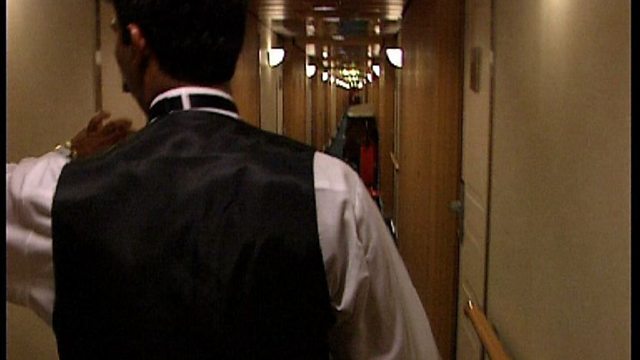
But in the series there are also glimpses of what life is really like below desks. I have cut together all the bits of Edward who has just been promoted to "butler". It gives you a very good sense of the intensity of the job. Edward works eight months straight, very long hours, 7 days a week, with just two hours off every other day.
The modern giant cruise ships that rose up in the 1990s are far more than just boats, they are really floating societies. But those societies are extremely strange.
Many of the liners work like a pure vision of capitalism. The floating worlds pay hardly any tax, most of the workers are protected by very few laws, and often many of them can only survive if they satisfy the needs and desires of the passengers well enough for them to give them a big tip. Free enterprise at its freest.
All this happens because of The Flag of Convenience. It was an idea that the Americans came up with in the early days of the second world war to allow them to send help to Britain. Roosevelt was worried that Hitler might declare war on the US - so a law was passed that allowed American ships to be registered either in Panama or in Liberia.
The Flag of Convenience was born out of altruism, but it is now used for purely selfish reasons. Many of the cruise companies register their ships in countries such as Panama and Liberia, this mean they do not have to pay corporate taxes in the US and aren't bound by many labour regulations.
Journalists and historians who have written about the industry have described the result. On many ships thousands of workers below deck work often 7 days a week, sometimes for fourteen hours a day. They are paid two to three dollars a day - depending entirely on tips to earn a living wage. The work most of them are asked to do on their shifts is impossible for one person to complete, so they in turn have to pay others to help them.
And a weird underground economy often results.
In his history of the industry, Kristoffer Garin has described how many of the workers also have to pay bribes to others elsewhere in the complex hierarchy of the ship - waiters have to bribe the cooks to make sure the food is hot, the cabin cleaners have to bribe the laundry chief to get clean sheets on time. He describes a world in which the cruise lines:
"take full advantage of their Flag of Convenience liberties when it comes to labor. Squeezing the most out of workers in return for the least possible pay is one of the keys to the industry's profitability, and the cruise lines have become extremely adept at it."
In response to such criticisms the cruise companies argue that great improvements have been made in the living conditions for their crews. And they say that the minimal wage - big tip system is the only way to keep the cost of the cruises affordable. They also point out that if a worker gets a lot of tips he or she can make a reasonable wage. But they also admit that it is a tough system
In 2001, the then CEO of Carnival Corp, Bob Dickinson, agreed to be the guinea pig of a BBC Back To The Floor documentary. Dickinson went to work at the lowest crew levels on the Fun Ship MS Imagination on a Carnival cruise in the Caribbean.
You have to admire him for doing it because it gives an amzing insight into just how exhausting and terrifyingly uncertain this world is. The person who is the real star of the film is Alina. She is a Romanian who cleans cabins and is paid $45 a month, and she works with Dickinson in the film.

Alina knows Dickinson is the boss, and you can see her holding back. But despite that she knows what she is up to - and she gives you a very clear idea of what life on Carnival's giant "fun ships" is really like.

But at the very same time Knut Kloster returned - with yet another vision.
He had spotted the central problem with the way the giant cruise liners had developed. They had been created as giant floating theatrical bubbles in which ordinary people could enter and feel for a few days that they were experiencing a luxurious indulgence that previously had been the privilege of just the rich and the upper classes.
But where should the really rich and powerful go - if all the Huggets were behaving as though they now ruled the world?
Knut Kloster came up with a solution. He was going to design the most luxurious floating metropolis ever, where only the really rich could come aboard. They could buy luxury apartments for millions of pounds and float around the world free of the hoi polloi.
Here is a report from BBC Breakfast Time in 1998 when the dream-boat project was first announced.
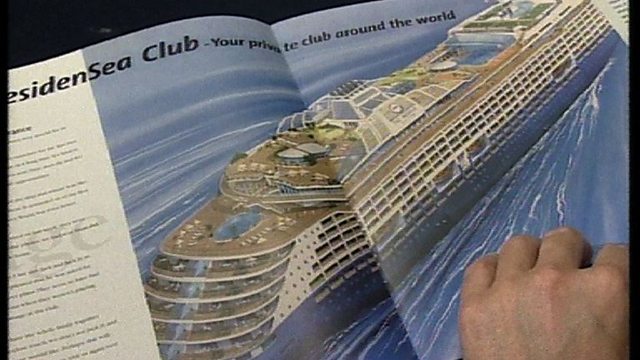
Kloster unveiled the ship in 2002. He called it The World. Just like everyone else he appeared to have abandoned his previous visions of world unity and compassion for the poor and downtrodden - this was strictly a utopia for the rich.
Journalists were allowed on for a look - and Oliver Burkeman described what he saw:
"This is not a private yacht, nor is it a cruise ship," Kloster announced. "It's a vacation lifestyle concept that goes beyond anything that has ever existed."
The World - 644ft long, 12 decks high, built at a reported cost of $ 532m - redefined the meaning of exclusivity. For prices from £1.5m to £5m and above, the ultra-wealthy could purchase homes on what was, in essence, a floating city-state, complete with shopping streets, six restaurants, the only full-sized tennis court at sea, a church, several pools, one of which doubles as a dancefloor, a running track, a 7,000 square foot spa, a helipad, a retractable marina, and one staff member per resident.
The apartments sold really well. Many billionaires were obviously attracted by the fact that the World's multi-denominational chapel was designed by a member of the Norwegian group Ah-Ha.
But as the deadline for the setting sail came nearer, something like 30 of the 110 apartments remained unsold. So the company running the ship did something without telling the residents. They let the apartments out to "very rich" people who wanted to go on a sea cruise.
In mid-2002 the World sailed off around the world. And it all started to go wrong - the "very rich" cruise passengers had obviously been attracted by the free drink and started to fall over and vomit. They were behaving like Huggets. The residents were outraged - and there was literally a mutiny on the ship. In 2003 the residents got together and bought the boat from the banks who owned it.
All the passengers were kicked off - and The World sailed off into mysterious exclusivity.
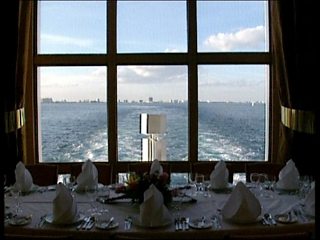
When Knut Kloster and Ted Arison invented the idea of modern cruising over forty years ago - at least one of them had a vision that it could help create a new era of world harmony and peace.
As the cruise-world developed and mutated over the next forty odd years it mirrored the changes in modern capitalism - from a naive utopian belief in transforming the world - to a harsh, narrow utilitarian vision of the free market where everyone above and below decks is expected to behave as "rational utility maximizers"
And today the world of the modern cruise liners also mirrors the present structure of our global society. Millions of people live in a world where they expect the luxuries which were previously only offered to the few. At the same time millions of others around the world struggle daily to create the platform that holds that fake luxury world together.
Meanwhile the small elite who are genuinely rich and powerful float off into the distance on their own boat - and kick anyone off who dares to get drunk and call it a cruise.
Our leaders tell us that we are all in the same boat.
But what will happen if our boat sinks? Will those same leaders be among the first to jump in the lifeboat and speed off into the dark telling us they have gone to get help?
User0531978888 · 14:49 1 Feb 2012
The CEO (Bob Dickinson), who has now r rel="ugc nofollow noopener noreferrer"etired (http://bit.ly/wKaQjE), didn't seem to have too much sympathy for the struggling workforce and seemed to take the whole placement as a bit more of a nice fun way to meet the guests and drop his favoured 'I'm a rookie' line. The huge irony in the video was the fair wage that Alina paid her helper (a fixed & decent amount) regardless of the tips she received herself, you can imagine Bob thought she was an idiot for this and probably would have liked to suggest she sorted out a free market style arrangement instead (e.g she pays her helper a base 0.50c a day and then 10% of any tips she receives at the end..). In all there were plenty of labour slaves on show in the videos here, how the butler managed his working schedule without a breakdown is a mystery to me.
"How one half of the world all began to live as though they were aristocrats, while the other half became their servants. And how this allowed the real elite aristocrats of our time - who had become wealthier than any group ever before in history - to disappear, and become invisible." - Sums things up perfectly, although this part "How one half of the world all began to live as though they were aristocrats" is clearly and unfortunately ephemeral for that one half through faux aristocratic experiences such as cruises!
Finally, the videos are further proof to me of how a cruise would be my least favourable way to spend my fleeting holiday time - Maybe it's my inner "Meanwhile the small elite who are genuinely rich and powerful float off into the distance on their own boat - and kick anyone off who dares to get drunk and call it a cruise." snobbery coming out but they look like cattle markets...
User0029395030 · 00:52 1 Feb 2012
Wow, it was last week or the week before I was shooting my mouth off over the Costa Concordia, its lousy top-heavy design, the concept of passenger liners as Biosphere-type contrivances and how passenger liners make no small contribution to resource wastage and environmental pollution on a sleazebucket moral-desert newspaper website, and making modest impact on the commenting rabble who could only keep on blaming the hapless captain for the sinking ... and here was AC hard at work putting this effort together!
I did whinge too about the potential such ships have for people wanting to evade taxation laws and the jurisdiction of countries where they may have committed other crimes.
Wikipedia also has quite a good article on seasteading plus internal and external links for anyone wanting more information.
I was thinking also that J G Ballard must have written a novel in his later years about people's (mis)behaviour on a cruise ship - it would have something along the lines of "Cocaine Nights" or "Kingdom Come".
PLus it would be easy for such floating colonies to register with Greek authorities as under the Greek taxation system, if you derive your income or part of it from ships or shipping, that income is tax-exempt. (Yes, it says so on the Wikipedia article on taxation in Greece.) Might play some part as to why Greece is in such dire straits because shipping is a big business there yet the income earned from shipping is not subject to taxation.
User0029395030 · 01:43 8 Feb 2012
The other thing that can be done with nightsoil which removes the stigma of its collection and disposal is for everyone in the community where this is done to collect their own nightsoil and take it to a central repository. They could be paid for doing this and the payment based on the dry weight of the nightsoil. They could collect animal waste as well and also be paid for it.
I managed to find an article about nightsoil collection in Japan during the Tokugawa period (1603 - 1868) which you all may find enlightening - it even mentions people fighting over who "owned" or "produced" nightsoil! That's taking the "love" a bit far.
http://www.energybulletin.net/node/5140
I hold that if you have to force people to do work, that "work" may not be of benefit to them or to anyone else and people will resist either passively (they won't do a good job, they dissociate themselves from it by taking drugs or getting drunk, they lose passion for life in extreme situations) or actively (by being violent). By "work" that is of no benefit, I mean work done in slave-like conditions where all the benefit or profit goes to an elite or work that designed to break a people's spirit, wrecks their culture and removes their identity as a people (eg forcing First Nations people, for want of a better collective term, to become farmers or industrial workers, accept a foreign religion and having their children taken away from them).
User0029395030 · 06:00 5 Feb 2012
Change the work, change the way it is done or change the conditions and you'll find people's motivation will change. Many if not most people are doing work that's not suited to their personalities, talent or skills: they're doing it under sufferance from need, family pressure, cultural pressure. The work may be fragmented: you could make a car for example by getting one group of workers to make the whole thing from scratch, in the manner of a craft; or you break up the manufacture into lots of meaningless repetitive jobs and assign each job to a different worker to do day in, day out. How much control does the worker have over the design of his/her job or the final product? - that's a major issue in motivating people. Then there is the work context: how is the worker rewarded, how many hours does the worker put in, is the factory safe to work in, does the worker have to travel long distances from home to the factory, is the worker happy doing the same thing day in, day out, with no prospect of advancing in the work hierarchy.
There is also the issue of extrinsic motivation versus intrinsic motivation. If you are doing work that is creative and personally fulfilling, you probably don't need much extrinsic motivation like money, status or acclaim. Probably the person to read is Mihaly Csikszentmihalyi who has done work on creativity and flow, and there is a branch of psychology known as positive psychology that looks at how to make life more fulfilling. And other people to read include Abraham Maslow (hierarchy of needs) and Daniel Kahneman (hedonic psychology).
As for Utopian conditions, I don't know if I would enjoy them for very long. I had a look at the Utopia Residences website www.utopiaresidences.com - Utopia is the name of the US$1 billion passenger liner being built by Samsung in Finland and is due to set sail in 2014. "Residences" can be bought for up to US$26 million a unit(that's a 3-4 bedroom unit measuring 530 - 614 sq m). Activities for passengers include on-shore excursions, art appreciation, sport, meditation, as well as the usual cinema offerings, nightlife, casinos and shopping.
I think I would get depressed as well as bored and have to depend on tranquillisers to survive such a lifestyle but I don't really know. I might even feel like sabotaging something as well and end up getting thrown off!
User0734807162 · 09:08 24 Feb 2012
But there's a whole sub-culture spin-off to this cruise industry that is I think right up your street to investigate. Have you ever heard of the Ship of Spies?
http://www.dailykos.com/story/2011/05/27/938697/-All-Aboard-the-Ship-of-Spies-or-Keeping-Bad-Company
Lee Ravitz · 02:03 3 Feb 2012
mididoctors · 15:16 1 Feb 2012
mididoctors · 13:38 7 Feb 2012
User0029395030 · 11:56 2 Feb 2012
But I believe in balance and keeping the sick stuff at bay so why don't I just throw in an anchor to the latest World Socialist website rant on the Costa Concordia shenanigans, the cynical move of Carnival Corporation's HQ to Panama to avoid US labour laws and the increasing risk to passenger and crew safety of over-built passenger liners plying ever more treacherous waters in ... the Arctic and Antarctic of all places?
http://www.wsws.org/articles/2012/feb2012/cost-f02.shtml
Don't forget that some time in April, 2012, is the 100th anniversary of the sinking of the Titanic due to piloting error and a misplaced iceberg.
And here is news about Shari Arison, heir to the whole Carnival Corporation circus, owner of Bank Hapoalim, the largest commercial bank in Israel and one of the world's "greenest" billionaires. She even has her own eco-spiritual website.
http://www.greenprophet.com/2010/04/forbes-shari-arison/
http://eolife.org/about_us/essence_of_life.aspx
There is a huge cognitive disconnect in people like Shari Arison and Patri Friedman who present themselves as caring and having sustainable values yet have lifestyles based on exploiting people at some level.
Now please excuse me so I can barf!
User0029395030 · 22:07 5 Feb 2012
As for athletes, they have different motivations which make them willing to endure pain. Whether they perceive the pain as "pain" is different. I heard the news about the men's final at the Australian Open tennis championships: the finalists played for over 5 hours and both would have needed 2 - 3 days to make a full recovery. Will they play that kind of marathon tennis if they happen to meet in the next major tennis championship final (Wimbledon most likely)? I would say they will and are prepared to. As for what motivates them, it is difficult to say but money, fame and beating Roger Federer in how many major championship titles they can collect may be the least of their motivations.
As for losing fat, that's a more complicated issue because Western diets are skewed towards foods that are cheap to make (and so cheap to buy) and can be produced in bulk or in large amounts but actually have very little nutrition. If you look at this map of obesity in the US, you'll see the states with the highest percentages of obesity as a proportion of the population are poor states like Alabama, Mississippi, Louisiana and others in the southeast part of the country:
http://www.cdc.gov/obesity/data/trends.HTML
This phenomenon has been noted in the UK and Australia as well, that the fattest people are the poorest because they can't afford to eat well and usually eat the cheapest foods which are energy-dense, industrially produced foods. These foods contain a lot of salt or sweeteners (natural or artificial), the latter being highly addictive.
User0531971486 · 11:23 3 Mar 2012
User0029395030 · 23:13 7 Feb 2012
Ohgee's remark brings back what I said in Comment 15 about job design and structuring and how that affects people's motivation.
The crappest job I can think of is collecting nightsoil which is still done in India and in some parts of Japan, and was common in China. There may be ways in which this job can be improved or redesigned so it doesn't pose a health hazard for collectors and minimises their physical contact with the waste: it can be treated a bit at the outhouse source before collection and technology can be invented or adapted to its collection. The collectors could take the waste to a sewage treatment plant for further composting before it is used as fertiliser.
The job can also be redesigned so it pays well and is linked to other jobs in a job rotation scheme for the collector. The stigma attached to being a nightsoil collector might reduce in some societies where "untouchables" do the job. You could also include incentives for people using the outhouse to leave it in a hygienic condition eg make it a coin-operated outhouse where they leave a coin deposit and get the coin back after using the outhouse. This would involve redesigning the toilet to eliminate or minimise smells.
The collectors themselves would be encouraged to own their work through suggesting ways of improving the collection, seeing their ideas taken on board and implemented, and being able to design their work tasks where this is possible.
Come to think of it, collecting nightsoil isn't the "crappest" job: I think being a soldier trained to kill people would be the crappest job. No way around it: coercion is required to get people, often young people straight out of school, to kill others who may be young like themselves. I need not go into any real-life examples, I think you know what they are. If you force young people to do this kind of job, they will suffer serious psychological consequences even if they are not physically harmed.
User0531971486 · 14:27 11 Feb 2012
In my initial post I was not directly addressing you or accusing you of wanting to abolish all hardship. Just asking a question. I would like to see Eudaimonia on Earth, of course, but right-wingers are not just cartoon bad-guys; their concerns about chaos and idleness should at least be addressed seriously.
@niallation: Belated reply:
CHILL OUT.
Please read and respond to what I actually wrote instead of assuming that my arguments must be the tip of a Nazi iceberg. You are arguing with your own imaginary fascist, I am not one.
User0401079199 · 22:29 31 Jan 2012
http://pua4ltr.wordpress.com/
Seriously, this stuff is gold.
User0029395030 · 03:45 28 Feb 2012
I forgot to add that in the case of Libya and probably other countries in Africa and Asia, tribal loyalty has traditionally been stronger than loyalty to a higher power and individualism and states have often resorted to authoritarian methods of rule to overcome the power of tribes or clans (which may or may not be ethnically based; Somalia is nearly 100% ethnic Somali but is hardly an ethnically homogeneous paradise due to the strength of clans) which can have the effect of destabilising the state and leading to conflict.
Colonialism is another factor that might encourage authoritarianism and in this respect, British colonialism in Africa may have unwittingly encouraged a strong-man approach to politics. My own impression from the shallow reading I've done is that most tribes in Africa spread political power among their members so it wasn't concentrated in one person, it was usually concentrated among a group of people and political power was separate from military power. When the British arrived in the 1800s and sent anthropologists into the areas they colonised, they insisted on imposing a monarchical structure on the various tribes because that was what they were used to. War chiefs who otherwise had no other power often ended up as "kings" and acquired power as a result of being feted by the British. I think this is how the Saud family in Saudi Arabia originally came to power.
I do not know how other European colonial powers dealt with their colonies in Africa and Asia although I do know Belgium treated its Congo colony in an extremely vile way.
User0531971486 · 22:34 13 Feb 2012
User0029395030 · 11:14 29 Feb 2012
Ha ha - looks like theartteacher2 may get the last laugh here!
That statement "wolves can't live in groups without bullying each other" - what is that based on and what is the justification?
I can't find any information online or in print that wolves bully each other in natural situations. According to the Wikipedia article on wolves, wolves will only fight and bully one another if they are thrown together in captive packs of unrelated animals; this implies that their environment is man-made or is an artificial one resulting from overcrowding, perhaps as a result of human activities encroaching on their natural territories and compressing them. In the wild where there is room to disperse freely, wolves form nuclear families of a mated pair with two generations of pups. In such cases, "alpha males" are no more than the male parents which would be expected to be dominant over the pups. How would the pups survive otherwise/
The reference is here:
http://www.npwrc.usgs.gov/resource/mammals/alstat/alpst.htm
As the author (I think it's L David Mech) rightly notes, the terminology of "alpha" individuals imposes a rigid hierarchy based on force on a species where none exists.
The only examples of bullying in non-human species I can find online are ones of bottlenose dolphins and orcas beating up porpoises and pilot whales by head-butting them repeatedly, either for fun, practice for hunting or out of boredom. Adult male dolphins are known to gang-rape other dolphins, male and female, and have even pestered humans for sex.
For examples, see here:
http://www.sexwork.com/family/dolphinrape.html
User0355020399 · 20:03 11 Feb 2012
Regardless of what one thinks of his politics, or even aspects of his conduct, a young man who started out as a steward on the type of ship shown in the Alan Whicker doc from 1966, just a few years before that film, ended up as a MP, then Minister, then de-facto Deputy Prime Minister of the UK. Even to the House of Lords.
John Prescott.
(Who in the Commons was for years the butt of Tory MP's shouting out 'waiter' whenever he rose to speak, which of course only made Prescott dislike them more).
But Prescott was in his sailing days in a Union, which was a springboard into politics and even further education.
How likely is it that those slaving away for a pittance on today's ships have the remotest chance of improving their life chances, not in the same way as Prescott maybe, but much at all?
Even allowing for the mass use of staff from developing nations (granted staff like the East Europeans on the Carnival documentary are not from the 3rd world so have better chances generally), will we ever see another British MP who started out as a ship's steward amongst the hordes of ex 'Special Advisors', Lawyers, City Traders in the political class today?
While Prescott will be remembered for thumping someone who threw an egg at him, for his love for Jaguar cars and for a rather grubby affair with one of his staff, once in government he did work to try and improve the lot of British Merchant Mariners.
(And pushing through not only the first new rail line in the UK since 1899, the HS1 for the Channel Tunnel link, which would at last match rail speeds on the UK section of the line to that of France, on time AND on budget. But you'd struggle to find THAT mentioned anywhere in the media).
User0531971486 · 01:14 2 Mar 2012
Ideals at loggerheads produce a lot of heat and noise.
User0029395030 · 23:01 1 Mar 2012
The colonisation / imperial project that the major European powers pursued from the 1500s on and which still goes on in various forms requires the belief that humans are born to be violent in order to justify the project to its intended beneficiaries and the take-over of other people's lands, bodies and minds so that the project can continue.
A big problem also is that our societies have been war-like for so long that not only have we forgotten or failed to record methods and strategies for achieving peace that people in the past used but we have internalised psychological and possibly even biochemical states of being or thinking that predispose to violence and war. So we are locked into this imperial project even though its usefulness, if it had any, has long since gone.
Every new generation of people born has to be trained to be violent even if passively through watching mainstream TV shows and movies that emphasise cathartic and violent resolution of conflicts instead of negotiation and diplomacy. Technology can also be co-opted in training people for violence: if it removes people from seeing the consequences of their actions, it can encourage them to behave in more extreme ways. The use of military drone technology in Afghanistan, Pakistan, Yemen and Somalia, in which people sit at consoles watching screens and use joysticks to operate the drones' firing mechanisms, is such an example.
A Swiss university undertook a study that found that stock-brokers behaved more recklessly and were more manipulative than psychopaths. Although the article I saw didn't go into details about the study, I don't consider that stock-brokers are a breed apart from the rest of us: they are the way they are because they work in an environment that forces them to be competitive and which rewards them intermittently (in the form of bonuses) on the basis of how much money they make for others who can make or break their careers. The technology they use which forces stock-brokers to make decisions on the spot might encourage extreme behaviour as well.
A link to the study is here: http://www.spiegel.de/international/zeitgeist/0,1518,7884